
The Misconception That Starts the Conversation
When homeowners hear that a professional cleaning may require several hours, the first reaction is often based on what they can see: “But the house is not that dirty.” That reaction is understandable. Most people naturally connect cleaning time with visible dirt. If the counters look clear, the floors do not look terrible, and the bathrooms are not heavily soiled, it can seem as though the appointment should be quick.
That is not how the workload of a professional cleaning is created.
Visible dirt affects how difficult the work will be, but it does not determine whether the work exists. A toilet does not stop needing to be cleaned because it looks acceptable from the doorway. A mirror does not stop needing to be polished because it has only a few light spots. A kitchen counter does not stop being part of the service because there are no crumbs sitting on it. Floors still need to be vacuumed, hard floors still need to be cleaned, and routine surfaces still need to be addressed throughout the home.
Professional cleaning is not a search for the dirtiest-looking object in each room. It is a complete process performed across all of the rooms and surfaces included in the agreed service.
The Common Assumption
“There is not much visible dirt, so there should not be much work.”
What Actually Happens
The home already contains a minimum amount of cleaning work. Visible dirt, buildup, pet hair, clutter, and deferred maintenance are added on top of that baseline.
Every Home Has a Baseline Cleaning Workload
Before the current condition of the home is considered, the home itself has already created a workload. The number of rooms, bathrooms, fixtures, counters, floors, doors, furnishings, and other included surfaces determines the minimum amount of work that exists.
This is the home’s baseline cleaning workload.
That baseline does not mean every home takes the same amount of time. It means every home has a starting point below which the work cannot realistically be reduced without reducing the scope, skipping areas, or lowering the quality standard.
The Work That Already Exists
- Moving through every included room
- Dusting accessible surfaces and furnishings
- Cleaning kitchen counters, sinks, fixtures, stovetops, and appliance exteriors
- Cleaning bathroom mirrors, sinks, counters, toilets, tubs, and showers
- Vacuuming carpet, rugs, edges, and accessible floor areas
- Vacuuming and mopping hard flooring
- Addressing cabinet exteriors, doors, handles, and other included touchpoints
- Changing tools and products appropriately between areas
- Final inspection and correction of missed details
What Can Be Added to the Baseline
- Heavy dust accumulation
- Pet hair, dander, and tracked debris
- Grease, food residue, and sticky buildup
- Soap scum and mineral deposits
- Clutter that blocks access to surfaces
- Excessive decorative items requiring careful handling
- Specialty materials that require slower methods
- Deferred cleaning or restoration-level conditions
A home that is already well maintained will usually stay closer to its baseline. A home with heavier buildup will move farther above it. But neither home begins at zero.
What a Baseline Looks Like Room by Room
The planning ranges below came from the same practical framework used on the Custom House Cleaning page. They are included here because they make the baseline-workload concept easier to see. Instead of treating the home as one large number, the chart shows how ordinary rooms begin adding time before unusual buildup is considered.
| Area | Typical Cleaning Time Range |
|---|---|
| Kitchen | Approximately 45–60 minutes |
| Full Bathroom | Approximately 45–60 minutes |
| Half Bathroom | Approximately 15–25 minutes |
| Primary Bedroom | Approximately 15–20 minutes |
| Standard Bedroom | Approximately 10–20 minutes |
| Living Room | Approximately 20–30 minutes |
| Dining Room | Approximately 10–20 minutes |
| Home Office | Approximately 15–20 minutes |
| Laundry Room | Approximately 10–20 minutes |
| Entryway | Approximately 10–15 minutes |
| Hallway | Approximately 5–10 minutes |
Custom & Luxury Home Considerations
Custom and luxury homes often require substantially more time because of larger rooms, oversized kitchens and bathrooms, additional cabinetry, custom showers, extensive glass, natural stone, specialty flooring, decorative architecture, premium fixtures, and other detailed finishes.
Actual cleaning time can also vary based on the home's condition, furnishings, pet hair, selected service level, and the specific tasks requested.
The chart is not intended to function as a stopwatch. A cleaner does not walk into every kitchen and automatically spend exactly 45 minutes. The purpose of the chart is to show that ordinary rooms have ordinary cleaning processes—and those processes accumulate.
How a Normal Home Quickly Becomes a Multi-Hour Appointment
Consider a relatively straightforward home with one kitchen, two full bathrooms, one primary bedroom, two standard bedrooms, a living room, a dining room, an entryway, and a hallway. Using only the planning ranges—not adding a laundry room, office, stairs, extra bathrooms, pet hair, clutter, or heavy buildup—the room-level work can already add up like this:
This is the point homeowners often do not see when they look at the home as a whole. No single room sounds overwhelming. The total becomes meaningful because every room contributes its own work.
Why a Full Bathroom Is Its Own Cleaning Project
Most people think of an additional bathroom as simply one more room. In reality, every full bathroom contains several separate cleaning processes.
There is the mirror. The sink. The faucet. The counter. The toilet. The exterior of the toilet. The base around it. The shower or tub. The glass. The fixtures. The cabinetry. The floor. Depending on the service level, there may also be trim, doors, reachable detail areas, or additional hand-detailing.
Even when each of those areas is only lightly soiled, each one still needs to be cleaned.
This is why two similarly sized homes can have very different minimum cleaning times when one has two bathrooms and the other has four. The difference is not simply two additional doors in the hallway. It is two complete bathroom cleaning processes.
Why Shower Design Changes the Work
Showers are one of the clearest examples of how design details affect cleaning time.
A standard fiberglass shower surround is not cleaned the same way as travertine, honed marble, floor-to-ceiling porcelain tile, or a custom glass enclosure. The material affects product selection. The size affects surface area. The number of niches, ledges, benches, fixtures, and glass panels affects the number of individual details that must be cleaned.
The Handheld Showerhead Detail
A handheld showerhead may seem insignificant until the shower needs to be rinsed. With a handheld sprayer, walls, corners, niches, benches, glass, fixtures, and the shower floor can be rinsed more directly. Without one, rinsing often becomes slower and more manual.
One shower without a handheld may add only a small amount of time. Three or four custom showers without handhelds can create a noticeable difference across the appointment.
This is one of the most important ideas in the entire guide: small design differences become meaningful when they are repeated.
Same Square Footage, Completely Different Workload
Square footage is useful because it establishes the general size of the home. It does not describe what is inside that square footage.
Home A
- 2,500 square feet
- 3 bedrooms
- 2 bathrooms
- Carpet in the bedrooms
- Standard kitchen
- 2 showers
- One fiberglass shower surround
- One travertine shower with glass
- Handheld showerheads
Home B
- 2,500 square feet
- 3 bedrooms
- 4 bathrooms
- Luxury porcelain flooring
- Double-island kitchen
- 3 glass showers
- No handheld showerheads
- Natural stone surfaces
The square footage is identical. The baseline cleaning workload is not.
Home B has two additional bathrooms, more glass, more hard flooring, more fixtures, a larger kitchen work area, more specialty materials, and a slower shower-rinsing process. It can be just as tidy as Home A and still require substantially more time.
This is why evaluating a home only by square footage can be misleading. Square footage tells us how much space exists. The home’s design tells us how much work exists inside that space.
Builder-Grade Homes and Custom Homes Are Not the Same
Luxury and custom homes often require significantly more time than a typical builder-grade home—and not simply because they are larger.
They frequently contain expansive kitchens, oversized bathrooms, additional cabinetry, premium appliances, decorative fixtures, custom showers, freestanding tubs, architectural details, natural stone, specialty tile, extensive glass, built-ins, and finishes that require more careful product selection.
A large kitchen may have two islands instead of one. An oversized primary bathroom may contain a freestanding tub, a large glass shower, separate vanities, more cabinetry, additional mirrors, and a larger floor area. Even when the room is in good condition, it contains more surfaces and more steps.
The added time is not a luxury surcharge disguised as cleaning time. It reflects the additional size, materials, fixtures, detail, and care required to clean the area to the same quality standard.
Flooring Is More Than the Final Step
Flooring is sometimes treated as though it is one simple task completed at the end. In a professional cleaning, floors can involve several distinct steps.
Carpet and rugs must be vacuumed carefully, including accessible edges and areas around furniture. Hard flooring is normally vacuumed first so loose soil, hair, grit, and debris are not pushed around during mopping. The floor is then cleaned with a product and method appropriate to the material.
Some floors require more control than others. Large-format porcelain can show streaking and may require careful product use. Natural stone requires appropriate chemistry. Highly reflective or dark flooring can reveal residue that would be less noticeable on another surface. Large open floor plans may require many clean mop pads rather than one pad carried across the entire home.
The number of floor types also matters. Moving from carpet to porcelain to natural stone may require different tools, products, or processes. That transition time is part of the work even though it does not appear as visible dirt.
The Console Table Example: Why “Only a Minute” Matters
Decorative items are a perfect example of how small amounts of time accumulate.
Imagine a six-foot console table that is completely empty. It can be dusted and wiped quickly because the entire surface is open and accessible.
Now place framed photographs, candles, plants, books, a decorative bowl, and several collectibles on the same table. The table itself has not become dirtier. But the cleaning process has changed. The cleaner must carefully work around the items or move and replace them. The items may need to be dusted individually. Their original arrangement must be respected.
The lesson is not that homeowners should remove everything they enjoy from their homes. The lesson is that the amount of visible floor space or square footage does not fully describe the cleaning workload.
Decorative Items and Clutter Are Different
Decorative items create additional detail work. Clutter can prevent access to the work entirely.
Photos, books, candles, artwork, plants, and collectibles are part of the home. When they are arranged intentionally, they can often be cleaned around or carefully handled within the agreed scope.
Clothing, mail, paperwork, toys, dishes, toiletries, loose products, and miscellaneous belongings create a different issue. They may cover the counters, floors, dressers, sinks, or furniture surfaces that need to be cleaned.
Professional cleaning is not the same as organizing. When a cleaner must repeatedly decide where belongings belong, gather loose items, move piles, or create temporary space before cleaning can begin, the appointment shifts away from cleaning time and into handling time.
In some cases, clutter adds time. In other cases, it means the covered surface cannot be properly cleaned at all.
Pets Change More Than the Floors
Pet-related cleaning is often discussed only in terms of visible hair on the floor. The actual effect can be much broader.
Pet hair collects along baseboards, under furniture edges, around chair legs, in carpet, on upholstery, near doors, and in corners. Dander and fine hair settle on surfaces. Water bowls create splash marks. Pets track soil through entryways and high-traffic paths. Heavy shedding can require multiple vacuum passes or repeated cleaning of tools.
A home with one low-shedding pet may remain close to its normal baseline. A home with several animals or heavy shedding may require significantly more labor even when the homeowner vacuums regularly.
Again, the pet hair does not create the kitchen, bathrooms, bedrooms, or floors. It adds work to the cleaning processes that already exist.
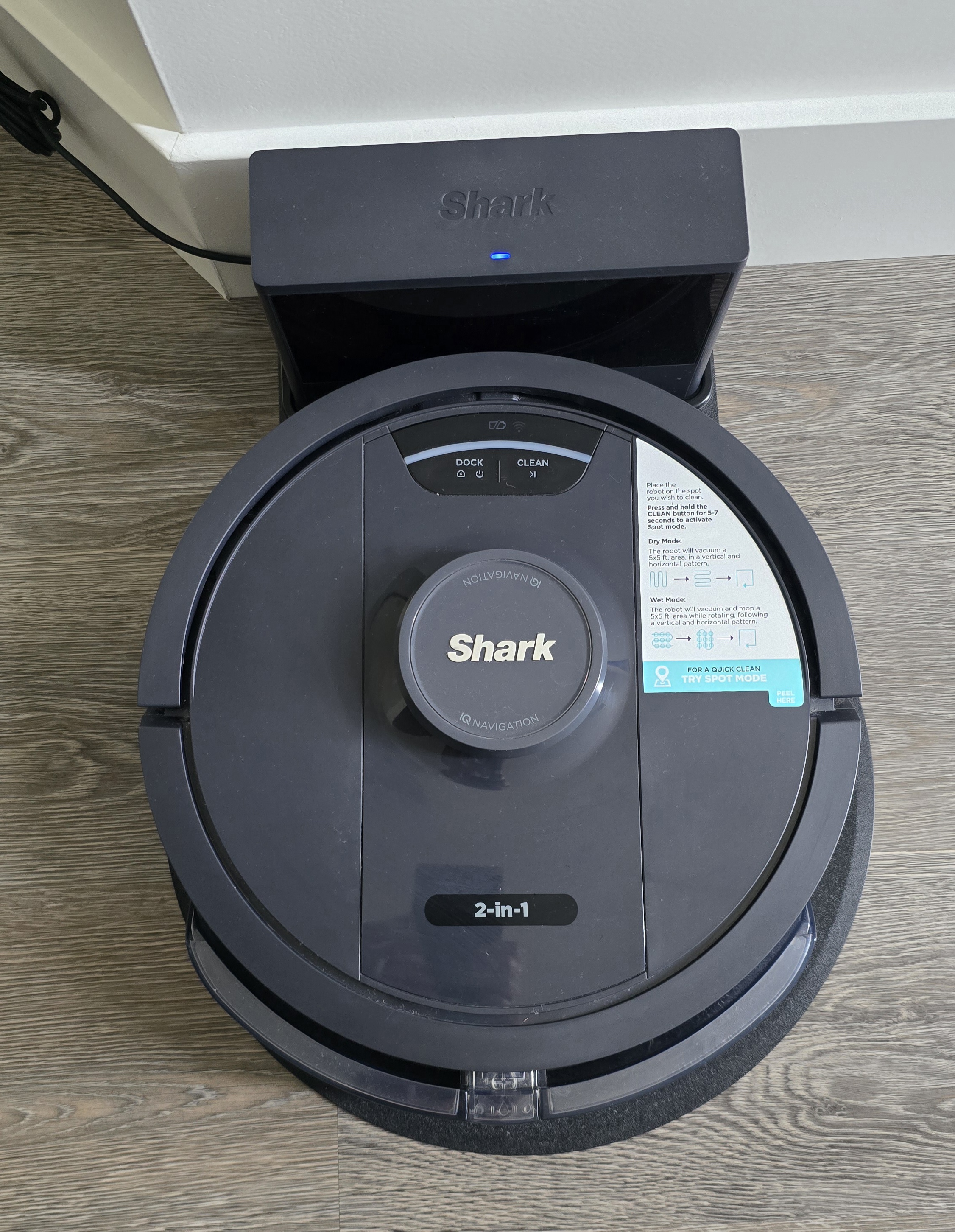
A Robot Vacuum Can Help Reduce Pet Hair Between Professional Cleanings
If you have pets, running a robot vacuum once a day can significantly reduce the amount of pet hair, dust, and dander that builds up between professional cleaning visits.
For homes with heavy-shedding dogs or multiple pets, consider running it twice a day. Frequent vacuuming helps prevent hair from collecting along baseboards, under furniture, in corners, and other areas where it becomes more difficult to remove.
A robot vacuum won't replace a professional cleaning, but it can help maintain your home between visits, allowing more of your scheduled cleaning to focus on detailed work rather than removing large amounts of accumulated pet hair.
Why We Recommend a Self-Emptying Model
The Shark robot vacuum we recommend has a self-emptying base. After it finishes vacuuming, it returns to the dock and empties its dust bin into a larger collection container. This allows it to continue running on schedule without needing to be emptied after every cleaning cycle.
In homes with multiple dogs or heavy-shedding pets, the larger collection container may still need to be emptied every couple of days.
View Our Recommended Shark Self-Emptying Robot Vacuum (affiliate link)When Dirt Truly Changes the Appointment
There is an important difference between normal household soil and buildup that changes the nature of the work.
Routine Household Soil
Light dust, ordinary bathroom use, minor fingerprints, crumbs, light floor debris, and manageable pet hair are expected parts of routine maintenance cleaning.
Heavier Buildup
Thick soap scum, dense mineral deposits, grease accumulation, heavy pet hair, neglected dust, sticky cabinetry, heavy floor residue, and long-deferred cleaning often require repeated passes, dwell time, stronger—but still surface-appropriate—methods, and more detailed labor.
Restoration-Level Conditions
Some conditions are no longer ordinary cleaning. Severely clouded shower glass, mineral-encrusted fixtures, damaged finishes, embedded residue, or natural stone issues may require separate surface restoration work. Some damage, such as etched glass or permanently altered finishes, cannot be cleaned away.
This is why a cleaner must distinguish between cleaning a surface and trying to reverse damage to it. More scrubbing is not always the correct or safe answer.
Why Recurring Cleaning Helps—but Does Not Eliminate the Work
Recurring cleaning keeps the home closer to its baseline workload. Dust remains lighter. Bathroom buildup is less likely to become severe. Kitchens require less corrective cleaning. Floors are easier to maintain. The home does not have as much time to accumulate layers of soil between visits.
But recurring cleaning does not make the routine cleaning process disappear.
A maintained bathroom still has a mirror, sink, counter, toilet, shower or tub, fixtures, cabinetry, and flooring. A maintained kitchen still has counters, a sink, a stovetop, appliance exteriors, cabinet fronts, and a floor. Bedrooms and living areas still collect dust and floor debris.
Weekly, biweekly, and monthly service can also create different workloads. A weekly home generally has less time to accumulate soil. A monthly home may look tidy but has had four weeks of ordinary use, dust, bathroom moisture, cooking residue, and floor traffic between appointments.
Why Professional Cleaning Cannot Be Reduced to a Stopwatch
The room chart is useful for planning, but quality cleaning is not accomplished by assigning an inflexible timer to every room.
A cleaner may discover that a bathroom is faster than expected and use that time elsewhere. Another room may contain a surface that needs a safer, slower approach. One floor may require another pass. A shower may need additional rinsing. A fragile finish may require extra care.
The purpose of time planning is to reserve enough labor to complete the agreed priorities to the expected standard. It is not to rush through each room until a timer sounds.
This is especially important in a custom clean. A three-hour appointment is a reserved amount of professional cleaning time. The selected priorities are completed in order. If the chosen rooms naturally require more than three hours, reducing the price or forcing the entire scope into the appointment does not reduce the work—it only creates pressure to skip steps or lower the result.
What Homeowners Usually Do Not See
Several parts of professional cleaning are easy to overlook because they are not represented by one dramatic before-and-after photograph.
None of these steps makes the home appear “dirtier” at the beginning, but all of them contribute to doing the work properly.
The Real Meaning of a Minimum Cleaning Time
A minimum cleaning time is not a claim that every home must take an unusually long time. It is a recognition that a complete scope contains a finite amount of work.
That minimum can change when the scope changes. Cleaning only a kitchen and two bathrooms is a smaller workload than cleaning the entire home. A Custom House Cleaning appointment can focus the reserved time on selected priorities. A full-home maintenance cleaning includes a broader routine scope. A deep cleaning adds more detailed work. A move-in or move-out cleaning includes different requirements and must be evaluated accordingly.
What cannot happen is for the same complete scope to remain unchanged while the real labor is treated as though it does not exist.
A cleaner can reduce the rooms, tasks, service level, or priorities. A cleaner cannot reduce the physical number of sinks, toilets, showers, counters, floors, and furnishings while still promising to clean all of them properly.
Key Takeaways
Every home has a baseline cleaning workload before visible dirt is considered.
Dirt, buildup, pets, and clutter add to the baseline; they do not create it.
Square footage establishes size, but bathrooms, flooring, materials, design, and furnishings establish much of the real workload.
Every full bathroom is a complete cleaning process—not simply one additional room.
Small details such as handheld showerheads, decorative items, glass panels, and specialty finishes become meaningful when repeated throughout the home.
The room-by-room planning chart shows how ordinary spaces accumulate into several hours of labor.
Luxury and custom kitchens or bathrooms may require 50% more time—or longer—than comparable builder-grade areas.
Recurring cleaning keeps the home closer to its baseline but does not remove the routine work.
Reducing the appointment time without reducing the scope does not eliminate work; it pressures the cleaner to rush or skip steps.
Continue Your Homeowner Education
This guide is part of a broader effort to help homeowners understand how professional cleaning works, what different services include, and why recommendations vary from one home to another.
Frequently Asked Questions
Why does a clean-looking home still take several hours?
Because every included room still contains surfaces, fixtures, furnishings, and flooring that must be cleaned. A well-maintained home usually requires less corrective work, but the normal cleaning process remains.
Are the room time ranges guaranteed?
No. They are planning guidelines based on light-to-normal buildup and minimal clutter. Room size, condition, pets, furnishings, specialty materials, and the selected tasks can change the time.
Why can two same-size homes require different cleaning times?
Square footage does not show the number of bathrooms, type of flooring, size of the kitchen, amount of glass, specialty surfaces, décor, or custom features inside the home.
Why do bathrooms add so much time?
Every full bathroom includes several separate processes: mirror, sink, counter, toilet, shower or tub, glass, fixtures, cabinetry, floor, and final inspection.
Does a monthly home take the same time as a weekly home?
Not necessarily. A monthly home has more time to accumulate dust, bathroom use, cooking residue, pet hair, and floor traffic between visits.
Can the cleaning time be reduced?
Yes, by reducing or prioritizing the scope. Selected rooms and tasks can be handled through a custom cleaning plan. Keeping the full scope while substantially reducing the labor time usually means something must be rushed or omitted.
Request a Quote
Tell us about your home, its condition, and your cleaning priorities.